
The useful answer first.
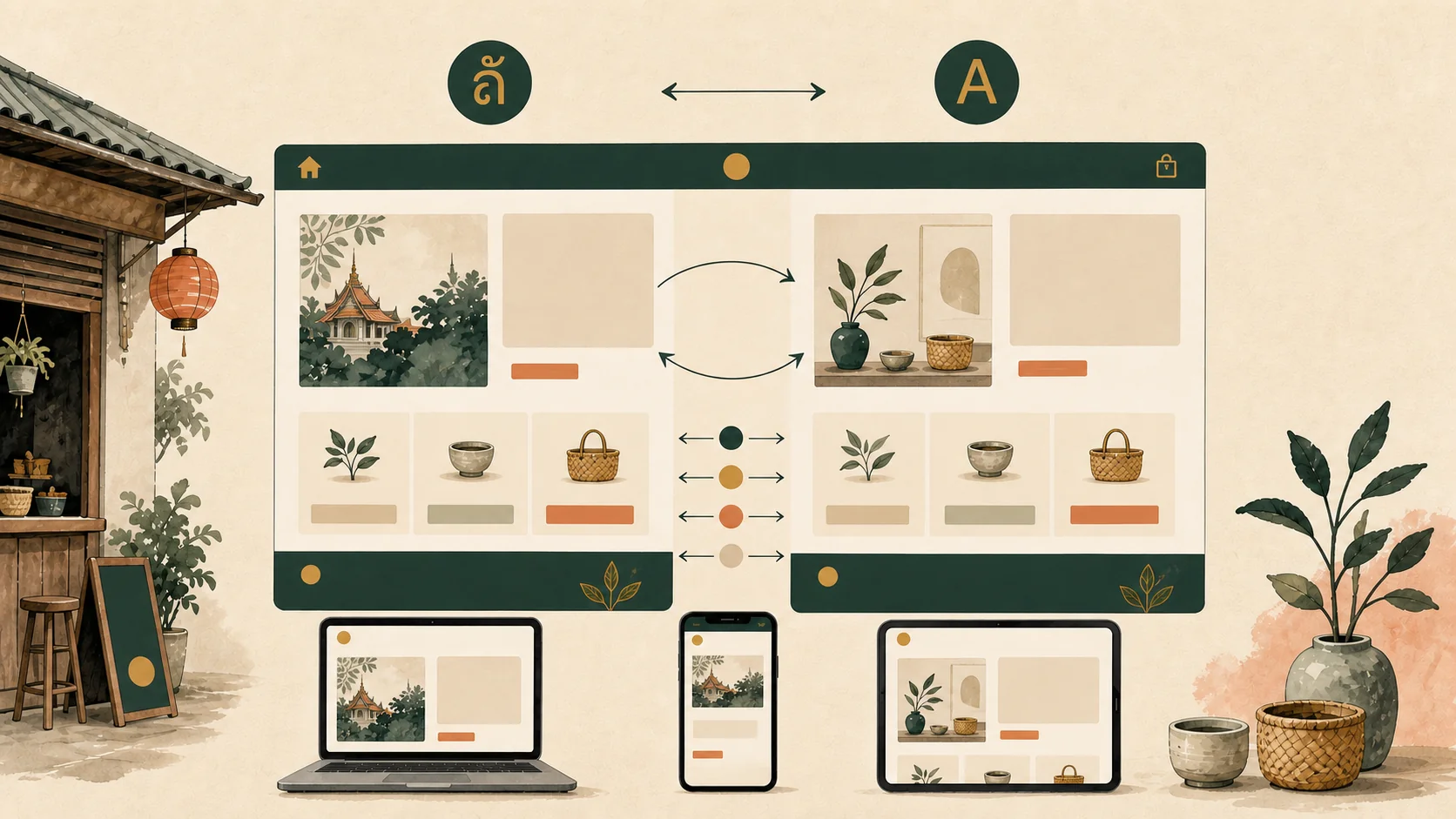
Plan Thai and English together from the start. Use matching page structures, human-reviewed language, flexible layouts, and clear language switching that keeps visitors on the equivalent page.
What affects the answer?
A simple comparison
A hospitality business serving local and overseas guests
Thai visitors may look for LINE contact and local promotions, while international guests may need transport guidance and English booking details. The brand should stay consistent even when priorities differ.
Translate meaning, not only words
Calls to action, service descriptions, search phrases, and cultural references may need adaptation. Literal translation can be technically correct while still sounding unnatural.
What should be included?
- Equivalent pages in both languages
- Appropriate Thai and Latin fonts
- Translated metadata and page titles
- No text baked into images
- Persistent language selector
- Localised forms and calls to action
When a simpler option may be enough
If nearly all customers use one language, translating only the essential visitor pages may be more useful than maintaining two complete websites. Start with evidence from your audience.
Questions worth asking
- 01Who will maintain both languages?
- 02Is the translation reviewed by a fluent person?
- 03Do visitors stay on the same page when switching?
- 04Are search titles translated too?
How we approach it
BaanCode designs bilingual components as flexible systems rather than duplicating pages at the end. This keeps spacing, navigation, and customer actions coherent in both languages.
See selected workShort answers
Does a bilingual site cost more?
Usually yes, because content, design checks, metadata, and ongoing updates must work in both languages.
Can Google understand both versions?
Yes, when each language has clear URLs, translated metadata, and correct technical signals.
Can we add the second language later?
Yes, but planning the structure early usually avoids expensive redesign work.