
The useful answer first.
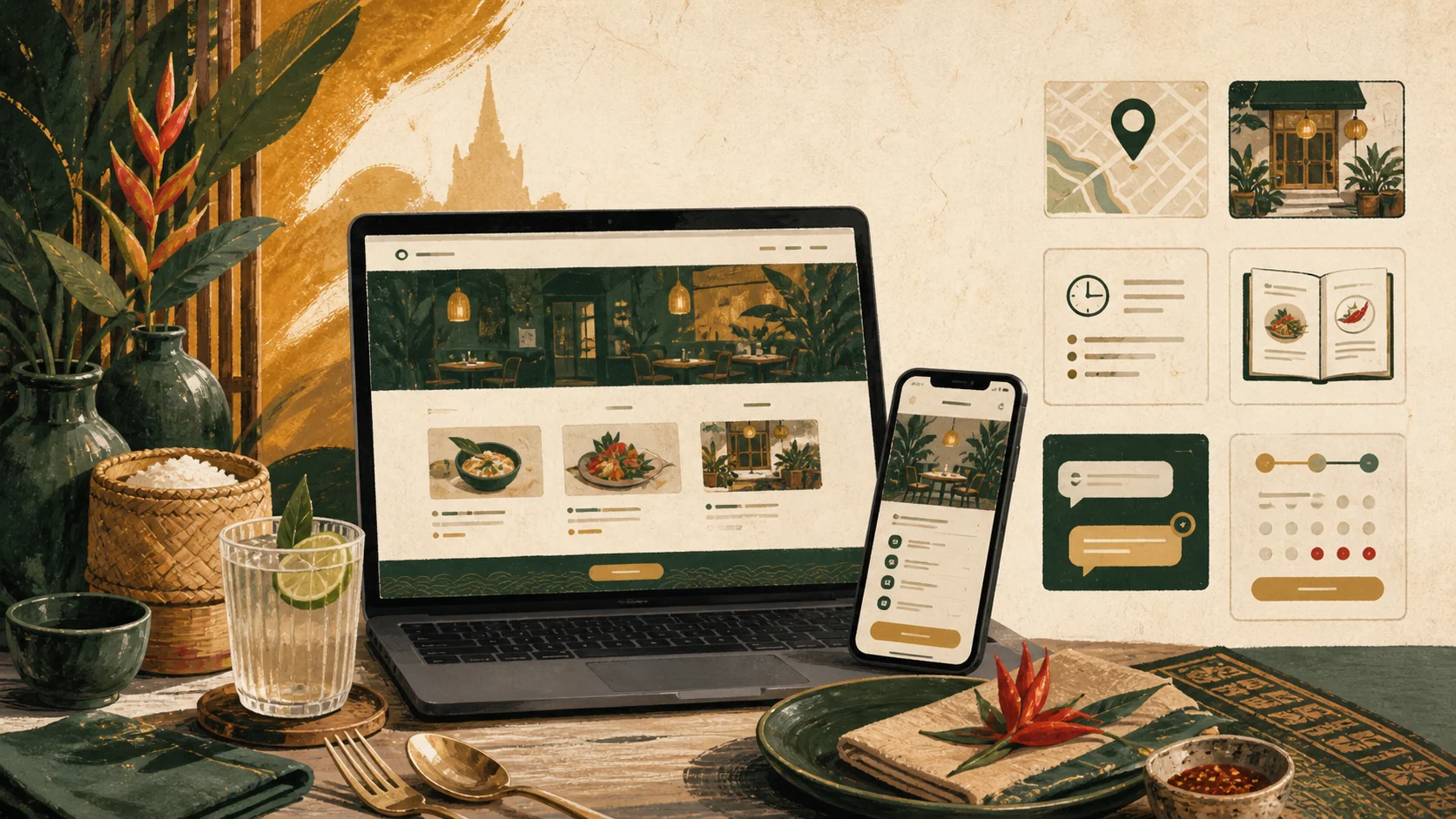
A restaurant website should quickly show the food, atmosphere, location, opening hours, menu, and the easiest way to reserve or contact you. On mobile, those actions should be reachable within seconds.
What affects the answer?
A simple comparison
A dinner guest searching at 6:30pm
They want to know whether you are open, see the menu, check the location, and reserve. A long brand story or PDF that is hard to read on a phone gets in the way of that decision.
Do not hide the menu in a difficult PDF
Readable web text works better on phones and is easier to update. A downloadable PDF can still be offered, but it should not be the only way to see the food.
What should be included?
- Cuisine and short positioning statement
- HTML menu with prices
- Opening hours
- Map and parking guidance
- Booking, LINE, or call action
- A small set of strong images
- Dietary and accessibility details where useful
When a simpler option may be enough
If your menu rarely changes and social media already drives every booking, a small one-page website may be enough. You do not automatically need a large custom site.
Questions worth asking
- 01Can staff update the menu?
- 02Does the reservation link work well on mobile?
- 03Will hours be easy to change?
- 04Can Thai and English visitors reach matching information?
How we approach it
When designing hospitality websites, BaanCode prioritises menu, location, hours, and the reservation journey because these are the answers guests usually need fastest.
See selected workShort answers
Do we need online reservations?
Not always. A clear link to your existing reservation platform, LINE, or phone may be enough.
Should prices appear online?
Usually yes. Current prices help guests decide and reduce avoidable questions.
Is Instagram enough?
Instagram is excellent for discovery, but a website gives you a reliable home for complete information and Google search visibility.